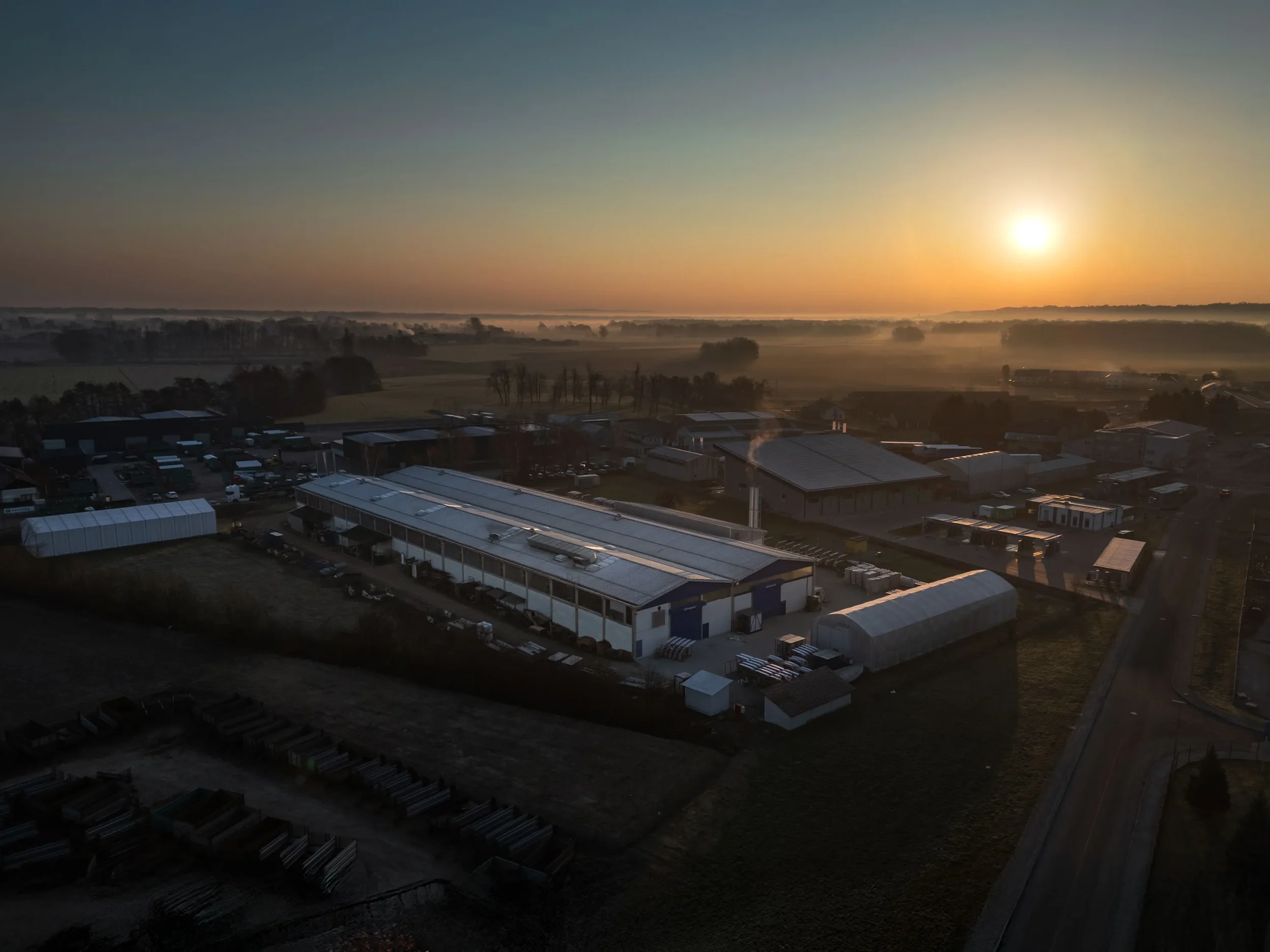
Advanced Composites Overview
Home / Composites / Advanced Composites Overview
Vertically Integrated Structural Integrity
Structural fatigue in high-performance composites is rarely the result of material choice alone; it is often the consequence of inadequate internal architecture. At Ultramarin, we mitigate the risks of delamination and structural failure by governing the entire lifecycle: from the initial CAD-driven lamination schedule to the final serial production run.
Our composites division operates as a technical partner for shipyards, automotive manufacturers, and industrial firms where structural failure is not a manageable risk. By leveraging a 70-year IMGRAD legacy, we bridge the foundational engineering of the K67 era with contemporary polymer science and automated precision.
Key Capabilities & Engineering Verticals
Structural Engineering & Tooling Optimization
We go beyond standard safety margins to fully optimize your GRP components. By defining precise Vf (Fiber Volume Fraction) and Tg (Glass Transition Temperature) targets, we ensure every component is engineered for its specific environment.
Smart Lamination
Development of precise ply-books to manage load paths and eliminate unnecessary weight.
Tooling Design
In-house production of high-stability molds designed for thermal cycling and strict dimensional accuracy over long production cycles.
Advanced Manufacturing & Resin Management
Our facilities are optimized for Vacuum Infusion (VIP) and Resin Transfer Molding (RTM)—processes that prioritize mechanical strength and consistency. By controlling the resin-to-fiber ratio with high precision, we achieve:
Void Minimization:
Elimination of air pockets to prevent moisture ingress and structural degradation.
Thermal Regulation:
Strict monitoring of temperatures during the curing phase to maintain material integrity.
Hybrid Laminates:
Strategic integration of Glass and Carbon Fiber to balance cost-efficiency with extreme stiffness-to-weight ratios.
Industrial Serialization & Quality Assurance
We provide the consistency required by international Tier-1 partners, scaling from bespoke prototypes to serialized production of 24-meter marine hulls and commercial superstructures.
Repeatability: Standardized infusion protocols ensure that Unit 1 and Unit 100 possess identical mass and structural properties.
Traceability: Comprehensive material logging and batch testing for mission-critical industrial components.
Global Logistics: Established workflows for the secure transport of large-scale, high-value monolithic structures to international assembly lines.
Analytical Comparison: Composite Manufacturing Methodologies
| Feature | Hand Lay-up (Conventional) | Vacuum Infusion (Ultramarin Std) | RTM (High Precision) |
|---|---|---|---|
| Fiber Volume (Vf) | ~30–40% | 55–65% | 55–65% |
| Consistency | Operator Dependent | Process Controlled | Highly Automated |
| Structural Integrity | Risk of Voids/Dry Spots | Minimal Void Content | Near-Zero Porosity |
| Weight-to-Strength | Standard efficiency | Maximum efficiency | Maximum efficiency |
[ Request Quote ]Request Composites Quote